Blog

  • Emerging Green Data Center Technologies Powering Tech Giants

    Emerging Green Data Center Technologies Powering Tech Giants

    Sustainability is no longer optional for major technology companies; it’s a strategic imperative in 2025. As data centers consume vast amounts of global electricity, tech giants are pioneering advanced green technologies to reduce environmental impact while maintaining performance and reliability.

    What Are Green Data Centers?

    Green data centers integrate environmentally friendly technologies and practices that minimize carbon footprints, reduce energy consumption, and promote sustainable operations. This includes renewable energy sourcing, efficient cooling methods, waste reduction, and sustainable hardware lifecycle management.

    Why Green Data Center Technologies Matter

    Data centers account for nearly 1% of global electricity use, projected to grow with the explosion of cloud computing and AI workloads. Green technologies not only cut costs over time but help companies meet increasingly strict global regulations and customer demands for sustainability.

    Key Technologies Driving Green Data Centers

    1. Advanced Liquid Cooling: Traditional air cooling is energy-intensive and often inefficient. Liquid cooling solutions, including immersion and direct-to-chip systems, dissipate heat more effectively, reducing power usage effectiveness (PUE) to near 1.0 in some cases.
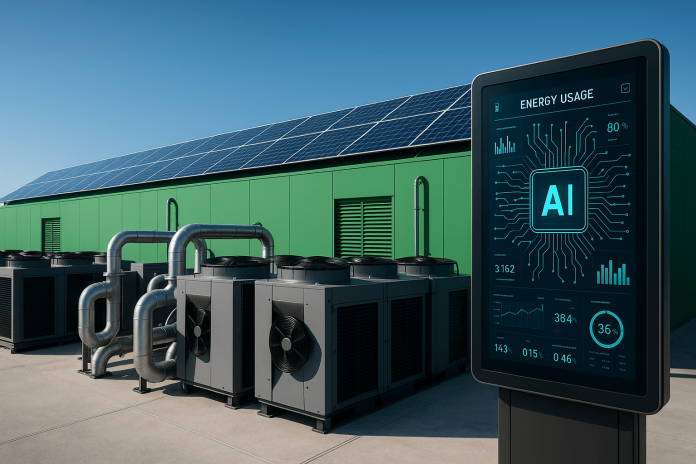
    2. AI-Powered Energy Management: AI algorithms dynamically optimize cooling and power distribution, lowering unnecessary consumption without compromising system stability.
    3. Renewable Energy Integration: Many data centers invest directly in solar, wind, or hydropower projects or purchase renewable energy credits to meet carbon-neutral goals.
    4. Carbon Capture and Storage Technologies: Cutting-edge facilities are experimenting with materials and methods to absorb indirect emissions linked to their operations.
    5. Sustainable Hardware and Recycling: Responsible sourcing and end-of-life recycling reduce ecological impact beyond just energy consumption.

    How Tech Giants Are Implementing Green Data Centers

    Companies like Google, Microsoft, and Amazon Web Services (AWS) have committed to operating entirely carbon-free data centers within the next decade. They are:

    • Partnering with renewable energy providers to power facilities with 100% clean energy.
    • Deploying liquid cooling technologies at scale across multiple global regions.
    • Using AI tools to continuously monitor and optimize operational efficiency.
    • Investing in R&D to improve battery storage and new cooling techniques.

    Challenges Faced in Green Data Center Deployment

    • High Upfront Costs: Advanced cooling systems and renewable infrastructure require significant initial capital.
    • Integration with Legacy Systems: Transitioning live data centers to greener technologies can be complex without downtime.
    • Geographical Variability: Availability of renewable resources fluctuates by region, requiring hybrid energy sourcing solutions.

    What This Means for Customers and Investors

    Green data centers translate into lower operational risks due to regulatory compliance and energy cost savings, attracting ESG-focused investments. Customers increasingly prefer hosting providers demonstrating strong sustainability practices, often influencing purchasing decisions.
  • How 5G Expansion is Reshaping Cloud Hosting Services

    How 5G Expansion is Reshaping Cloud Hosting Services

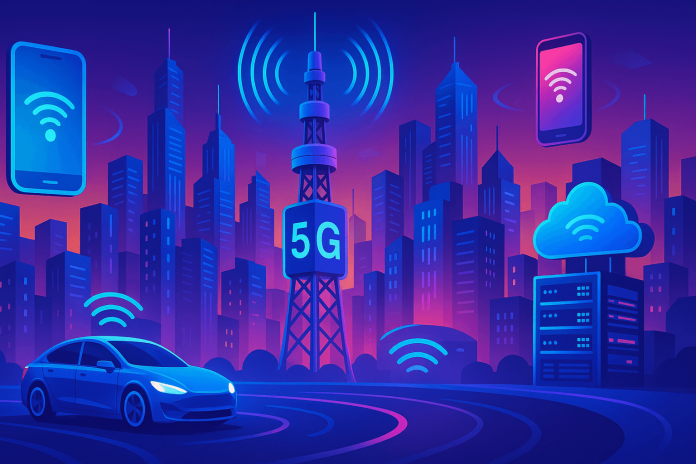
    The global rollout of 5G networks is revolutionizing cloud hosting services in 2025, bringing transformative improvements in speed, connectivity, and capabilities. For businesses leveraging cloud infrastructure, 5G transforms what’s possible in real-time data processing, edge computing, and user experience.

    What is 5G, and Why is it Important for Cloud Hosting?

    5G is the fifth-generation wireless network standard that offers significantly higher data transfer rates (up to 10 Gbps), ultra-low latency (as low as 1 ms), and massive device connectivity compared to 4G. These improvements enable cloud providers to offer new service models and support data-intensive applications more efficiently.

    Why 5G Expansion Matters for Cloud Hosting

    • Enables Edge Computing: 5G’s reduced latency and high bandwidth allow hosting services to deploy edge data centers closer to end-users, reducing lag and improving responsiveness for time-sensitive applications.
    • Improves Mobile Cloud Access: Applications accessed through smartphones and IoT devices become faster and more reliable, expanding cloud hosting usage scenarios.
    • Supports IoT Ecosystem Growth: 5G supports billions of connected devices with real-time data transfer back to centralized or distributed cloud services.
    • Facilitates New Business Models: Low latency empowers hosting companies to offer cloud gaming, augmented reality (AR), virtual reality (VR), and remote work solutions with previously impossible performance.

    How Cloud Providers Are Adapting to 5G

    • Deploying Micro Data Centers: Cloud providers are investing in smaller, distributed data centers near 5G hubs to capitalize on edge computing benefits.
    • Integrating 5G Network APIs: This allows seamless orchestration between the network and cloud services for optimized data routing and resource allocation.
    • Enhancing Security: 5G-connected environments require new security frameworks to protect data in transit and at the edge.

    Use Cases Enabled by 5G Cloud Hosting

    • Real-Time Video Streaming & Gaming: Ultra-low latency enhances immersive experiences.
    • Smart Cities and Autonomous Vehicles: Reliable data sync with cloud AI is critical for sensor data analysis and decision-making.
    • Healthcare Telemetry: Remote surgeries and diagnostics benefit from instant data transfer and cloud computation.

    Challenges in 5G Cloud Integration

    • Infrastructure costs for deploying edge facilities can be high.
    • Standardizing cloud and 5G interoperability is ongoing.
    • Security and privacy concerns around distributed data increase complexity.

    FAQs

    Q1: How does 5G lower latency compared to 4G?
    By using higher frequency bands, network slicing, and edge computing, 5G reduces round-trip data travel times significantly.

    Q2: Can existing cloud hosting customers benefit immediately from 5G?
    Benefits depend on the customer’s location relative to 5G coverage and the provider’s edge infrastructure deployment.

    Q3: How do 5G and cloud hosting improve IoT device performance?
    They provide faster, reliable connections allowing IoT devices to send/receive data instantaneously for smart automation.

    Q4: Are there specific industries most impacted by 5G-cloud synergies?
    Healthcare, manufacturing, entertainment, and transportation are early adopters benefiting most.

    Q5: What security measures are needed for 5G-enabled cloud hosting?
    End-to-end encryption, zero-trust architectures, and edge device authentication are critical.

    Market Insights and Trends

    • Analysts predict 5G connections will surpass 3 billion worldwide by the end of 2025.
    • Edge computing market, driven by 5G, is expected to reach $30 billion by 2027.
    • 75% of cloud providers are actively developing 5G-compatible service offerings in 2025.